This article appears as part of a special issue series of CITE English Language Arts Education focused on critical perspectives on digital platforms in ELA teacher education (Volumes 24:4 to 25:3).
The rapid advancement and integration of artificial intelligence (AI) in education, particularly in English language arts (ELA) classrooms, has ushered in an era of unprecedented change and challenge. At the heart of this transformation lies a critical concern: the preservation and enhancement of teacher autonomy to determine if and how AI fits into the needs of their students and curriculum.
Teacher autonomy, defined as the professional independence of teachers in schools, especially regarding the appropriateness of their own teaching styles and methods (Pearson & Moomaw, 2005), is being challenged by the emergence of sophisticated AI technologies. Teacher autonomy is not merely about freedom from constraint but is integral to teacher professionalism (Wermke & Höstfält, 2014). In ELA classrooms, where nuanced understandings of language, literature, and communication are paramount, the preservation of teacher autonomy is particularly crucial. Autonomy refers to teachers’ professional independence in decision-making regarding their teaching methods and curriculum choices.
Much of the discourse about AI in education increasingly strips teachers of their autonomy, positioning them as instrumental objects instead of as creative, transformative agents of change. Agency refers to teachers taking purposeful action to effect change in their professional practice (Calvert, 2016). As Priestley et al. (2012) noted, “Teacher agency is not simply a matter of personal capacity or autonomy, but rather is the outcome of the interplay of individual efforts, available resources, and contextual and structural factors” (p. 3).
This distinction becomes particularly relevant as policies and implementation strategies are frequently developed without significant input from educators, further threatening their autonomy. Such top-down approaches create a mismatch between the intended use of AI tools and the learning needs of students in the classroom. A lack of input from educators about AI undermines teachers’ autonomy and agency, diminishing the very educational outcomes these technologies aim to enhance.
The integration of AI in ELA classrooms presents a double-edged sword. On one hand, these tools can augment teaching practices, offering personalized learning experiences and freeing up time for more meaningful teacher-student interactions. Kasneci et al. (2023) noted that AI has the potential to improve student engagement and interaction while personalizing learning experiences. On the other hand, the algorithmic nature of AI decision-making can inadvertently shape and control pedagogical choices, sidelining teachers’ professional judgment and intuition. This tension aligns with what Biesta (2015) termed the “learnification” of education, where the focus shifts from teaching to learning, with platformization and digital tools automating some teaching tasks, thus diminishing the role of the teacher. This tension is exacerbated by the rapid pace of AI development and integration, which is outpacing the ability of educational systems to develop appropriate policies and training.
Giannini (2023) and Mistretta (2023) argued that teachers require additional training and support to navigate ways of using AI in lesson planning, assessment design, grading, and instruction. However, such training must go beyond mere technical proficiency to address the broader implications of using AI to improve teaching while maintaining teacher autonomy and professional identity.
Our study sought to explore the complex interplay between AI integration and teacher autonomy in ELA classrooms. We aimed to understand how the discourses surrounding AI in education construct relationships between teachers, students, and AI tools, and how these constructions impact teacher autonomy. Furthermore, we investigated how teacher education programs can better prepare ELA teachers to engage critically with AI technologies while maintaining their professional agency and decision-making power.
By examining these issues through the lens of discourse analysis (Gee, 2014) and reflexive thematic analysis (Clarke & Braun, 2016), we used complementary approaches to discern meaning from data. We drew upon theories of critical literacy (Luke, 2012) and teaching as a sociocultural practice (Vygotsky, 1978). The study, thus, contributes to a nuanced understanding of AI’s role in ELA education. Our goal was not only to illuminate the challenges to teacher autonomy posed by AI integration and ubiquitous availability but also to identify strategies for empowering educators to harness the benefits of these technologies while preserving their essential role in shaping meaningful learning experiences.
While navigating this transformative period in education, prioritizing the preservation and enhancement of teacher autonomy is crucial. Only by ensuring that ELA teachers remain empowered decision-makers and critical evaluators of AI tools can the full potential of these technologies in enriching language arts education be realized. This study contributes to this vital conversation, offering insights and recommendations for fostering an educational future where AI augments, rather than diminishes, the irreplaceable role of human teachers in ELA classrooms.
Teacher-AI Relationships and Collaboration
Scholars have paid significant attention to human-AI relationships and collaboration, but teacher-AI relationships, collaboration, and social interaction have remained largely unexplored. Jeon and Lee (2023) identified possible roles teachers and AI can take on in teacher-ChatGPT educational collaboration. Other scholars have studied possible ways ELA teachers can use ChatGPT and other CAI-LLMs. Ji et al. (2023) reviewed 24 research studies conducted in AI-integrated language learning environments from 2015-2021 and found that only a limited amount of empirical evidence existed regarding teacher-CAI-LLM collaboration.
The study described in this article took a critical literacy perspective to explore the sociocultural aspect of teacher-CAI-LLM relationships. It is structured around three research questions:
- How do the discourses surrounding Generative AI (GenAI) tools in K-12 ELA classrooms construct the relationships between teachers, students, and these digital platforms?
- In what ways can ELA teacher educators prepare preservice teachers to critically evaluate and engage with GenAI platforms in their future classrooms?
- How can ELA teacher education programs foster pedagogical autonomy in preservice teachers within an educational landscape increasingly mediated by AI platforms?
Theoretical Framework
Critical literacy theory and teaching as a sociocultural practice are complementary theoretical lenses we employed to examine the relationship between ELA teachers, their students, and CAI LLM platforms. Within these theoretical lenses, learning is situated in social, historical, and cultural contexts and mediated by cultural tools, such as computing systems, and language.
Critical Literacy Theory
Critical literacy theory adopts a sociopolitical orientation to literacy, where critical consciousness is deeply connected to historical and social power relations (Bishop, 2014; Fajardo, 2015). Moving beyond traditional views of literacy as a technical or autonomous, and decontextualized skill, critical literacy empowers learners to be critically aware, socially responsible, and politically active citizens that bring about social transformation through literacy practices (Fajardo, 2015).
In the context of AI integration in ELA classrooms, critical literacy theory provides a framework for examining how these technologies impact teacher autonomy and decision-making processes. As AI tools increasingly influence educational practices, teachers must maintain their agency in critically evaluating and applying these technologies (Pangrazio & Sefton-Green, 2021). This approach aligns with the core tenets of critical literacy, which emphasize the importance of questioning dominant narratives and power structures (Luke, 2012).
Critical literacy pedagogy positions learners as active meaning-makers whose interests and experiences are central. Similarly, it positions teachers as autonomous professionals capable of making informed decisions about the integration and use of AI tools in their classrooms (Mirra et al., 2018). While critical literacy is a student-empowered pedagogy, it requires educators’ own ongoing learning and growth, particularly in navigating the complexities of AI-enhanced learning environments.
Within this theoretical context, students benefit from their teachers’ ongoing, self-directed professional development (Williams, 2022). This self-directed learning is crucial for maintaining teacher autonomy in the face of rapidly evolving AI technologies. By engaging in continuous professional development, teachers can make informed decisions about how to integrate AI tools in ways that align with critical literacy goals and preserve their pedagogical autonomy (Darling-Hammond et al., 2017).
This pedagogy can be operationalized by creatively supplementing or reframing more traditional materials with diverse perspectives to allow for critique (Williams, 2022) and by examining the politics of daily life and actively seeking out contradictions within modes of life, theories, and intellectual positions (Bishop, 2014). In the context of AI integration, this might involve teachers critically examining the algorithms and data sets underlying AI tools, questioning their potential biases, and making autonomous decisions about how to use or modify these tools to best serve their students’ needs (Reich & Ito, 2017).
Furthermore, critical literacy theory encourages teachers to maintain their autonomy by fostering a classroom environment where both they and their students can critically engage with AI technologies. This involves not only teaching students to use these tools effectively but also to question their impacts on literacy practices, power dynamics in the classroom, and broader societal implications (Cope & Kalantzis, 2015).
By applying critical literacy theory to the integration of AI in ELA classrooms, teachers can preserve their autonomy and decision-making power while also preparing students to be critically literate in an increasingly AI-driven world. This approach ensures that the adoption of AI technologies in education is guided by pedagogical considerations and critical reflection, rather than being driven solely by technological determinism or external pressures (Selwyn, 2019).
Extending critical literacy perspectives to teacher training and development, the recognition that literacy education goes beyond reading and writing skills requires understanding both the teacher’s and student’s experiences in terms of historical power relations and using language for advocacy, social critique, and transformation. From this perspective, ELA teachers should examine critical consciousness about social injustices as agents of change and be empowered to challenge dominant ideologies (Jemal, 2017) and the role of digital platforms in perpetuating these dominant ideologies.
Teaching as a Sociocultural Practice
Teaching as a sociocultural practice (TSP) is an educational perspective that emphasizes the role of social interactions, cultural context, and historical influences on teaching and learning. By viewing teaching as a sociocultural practice, educators can create more inclusive and engaging learning environments that recognize the diverse needs and backgrounds of their students. TSP, grounded in Vygotsky’s sociocultural theory (Murphy, 2008), views learning as a socially mediated process rather than solely an individual cognitive act. Learning is not a direct transmission from teacher to student but is instead mediated through psychological tools, practices, and social interactions (Kozulin, 2003).
TSP highlights the critical role of two types of mediation in teaching and learning (Daneshfar & Moharami, 2018; Kozulin, 2003): the process of facilitating learning through social interactions with more knowledgeable people (e.g., instructors, peers) and mediation through psychological tools like language, signs and symbols, decision making systems (e.g., algorithms, heuristics, decision trees), and cultural narratives (see also Wertsch, 2007). CAI-LLM platforms combine some social characteristics of human mediation with the capabilities of psychological tools. They are computing and decision support systems with the ability to communicate with language, symbols, and images.
Teachers play a crucial role in filtering and adjusting learning materials to suit learners’ needs (Daneshfar & Moharami, 2018). To benefit from mediated learning, learners must appropriate the psychological tools for their own use. This involves internalizing external activities into internal mental processes. However, psychological tools may not be effective without the guidance of a human mediator who can help the learner make meaning of the tools (Kozulin, 2003).
In an AI-infused environment, mediation can occur through collaborative dialog between the learner and CAI, potentially allowing teachers and students to work beyond their zone of proximal development — the space between what learners can do independently and what they can achieve with guidance. Teachers can mediate learning by creating learning activities that incorporate material and symbolic tools, as well as providing human mediation to guide students’ use of these tools.
Methods
This exploratory study employed qualitative research methods discourse analysis (DA; Gee, 2014) and thematic analysis (Clarke & Braun, 2016) to analyze in-depth teacher interviews and online artifacts. We conducted 10 in-depth interviews with early-career ELA teachers in grades 3-8 (see Table 1). The educators had 1-3 years of teaching experience and were currently teaching grades 3-8 in the southwestern USA.
Table 1
Teacher Profiles
| Subject Number | Teaching Experience (years) | School District Type | Grade(S) Taught | AI Knowledge |
|---|---|---|---|---|
| 1 | 2 | Large, urban | 6 | 1 |
| 2 | 2 | Large, urban | 4 | 2 |
| 3 | 3 | Large, urban | 10 | 2 |
| 4 | 1 | Large, urban | 9 | 2 |
| 5 | 1 | Mid-sized, urban | 5 | 2 |
| 6 | 2 | Small, suburban | 5 | 2 |
| 7 | 1 | Large, urban | 10-12 | 1 |
| 8 | 3 | Small, suburban | 5 | 2 |
| 9 | 3 | Small, suburban | 8 | 1 |
| 10 | 2 | Small, suburban | 6 | 2 |
| Notes: School district sizes: Large 25,000-50,000 students; Mid-sized: 10,000-24,999 students; Small: Less than 10,000 students. AI knowledge: Teacher’s self-evaluation of their knowledge about artificial intelligence and its uses on a scale of 1 (low, little or no knowledge) to 5 (high, expert) | ||||
The interviews were conducted in February 2024 following an IRB-approved protocol for informed consent. The interviews were semistructured and included a general discussion of CAI-LLMs, ChatGPT, and AI education tools, ELA teacher’s use of CAI-LLMs, prior training and readiness to use these platforms in their instruction, and their perceptions of CAI and GenAI. Additionally, the interviews explored teachers’ views on their autonomy and decision-making processes in relation to AI integration in their classrooms.
The insights from the interviews were used to establish the parameters for selecting digital documents for analysis. The interviews provided context and informed our initial DA coding and examination of social interactions and power dynamics that occur in the discourses about CAI-LLMs and teachers with a specific focus on how these discourses construct and potentially challenge teacher autonomy.
Data Collection and Process
In this study, we employed DA, a qualitative analytical approach for studying language in context. Contextualizing how we use language provides insights into its underlying power dynamics and real-world consequences (Gee, 2014). Drawing primarily on Mullet (2018), we used the DA process shown in Table 2.
Our DA process was specifically tailored to examine how the discourses surrounding AI in K-12 ELA education constructed and potentially challenged teacher autonomy. We paid particular attention to language and themes related to teacher agency, decision-making processes, and the changing role of teachers in AI-integrated classrooms.
Table 2
Discourse Analysis Process
| Stage of analysis | Description | Parameters for This Study |
|---|---|---|
1. Select the discourse | Establish the parameters for selecting discourse. | Experiences of teachers who are affected by or use GenAI, AI Assistants, ChatGPT, or similar CAI-LLM. |
| 2. Locate and prepare data sources | Select text and prepare data for analysis. | Online blogs, education articles, and company and organizational statements published since November 30, 2023 release of ChatGPT. |
| 3. Explore the background of each text | Examine the social and historical context and producers of the texts. | Author characteristics, technical background, education background, general AI attitude, intended audience, intended purpose, publisher characteristics, format. |
| 4. Code texts and identify overarching themes | Identify the major themes and subthemes using choice of qualitative coding methods. | Thematic analysis, open coding followed by axial coding. |
| 5. Analyze the external relations in the texts (interdiscursivity) | Examine social relations that control the production of the text; in addition, examine the reciprocal relations (how the texts affect social practices and structures). How do social practices inform the arguments in the text? How does the text in turn influence social practices? | Dominant social practices and norms (e.g., role of teachers, agency/autonomy), governments and legal systems, institutions (e.g., schools and school systems), corporate ed tech firms. |
| 6. Analyze the internal relations in the texts | Examine the language for indications of the aims of the texts (what the texts set out to accomplish), representations (e.g., representations of social context, events, and actors), and the speaker’s positionality. | Headlines and leading statements, structural organization or layout of the text, use of quoted material, vocabulary (e.g., high frequency or sensitizing words), grammar, voice, and linguistic devices such as turn-taking, metaphor, or rule-of-three. |
| 7. Interpret the data | Interpret the meanings of the major themes, external relations, and internal relations identified in stages 4, 5, and 6. | Revisit the structural features and individual fragments, pacing them into the broader context and themes established in the earlier stages. |
| Adapted from Mullet, 2018. | ||
Discourse Analysis
A total of 74 digital documents (see appendix) were selected by the lead author based on the DA selection criteria. These digital documents included all associated text, linked documents, and multimedia. The multimedia pieces included 40 digital artifacts. Another 34 digital artifacts were selected by an expert on document research, writing instruction, and practice. In addition, posts and comments about AI, ChatGPT and related topics made since November 2022 from a Reddit online community for ELA teachers were reviewed. This community of 21,000 members was described as “a place for English teachers to share ideas and lessons and to brainstorm and collaborate on all things related to English Language Arts” (r/ELATeachers, 2012, About Community section).
The analysis focused on identifying discourses related to teacher autonomy and agency. We examined how different stakeholders (teachers, administrators, policymakers, and edtech companies) discussed the role of teachers in AI-integrated classrooms, paying particular attention to language that either reinforced or challenged teacher autonomy. We also analyzed how the discourses framed teachers’ decision-making processes and their ability to shape AI integration in their own classrooms.
Our coding process involved identifying patterns related to teacher autonomy, such as the following:
- Teacher control over curriculum and instruction.
- Decision-making power in AI tool selection and implementation.
- Professional judgment in balancing AI use with traditional teaching methods.
- Teacher voice in policymaking regarding AI in education.
- Perceived threats to teacher autonomy from AI integration.
Three documents that framed the dominant narrative about AI in education are discussed in the section that follows. Each reports constructing teacher autonomy differently.
Document 1: U.S. Department of Education Report
This report emphasized the essential role of human teachers, constructing teacher autonomy as irreplaceable in the AI era: “There is a critical need to focus on addressing the challenges teachers experience. It must become easier for teachers to do the amazing work they always do” (U.S. Department of Education, Office of Educational Technology, 2023, p. 3; D45).
Document 2: McKinsey Global Survey
This report by Bryant et al. (2020) frames AI as a time-saving tool, constructing teacher autonomy as the ability to focus on more important tasks: “The narrative became that ChatGPT saves teachers time so that makes it worth and problems it may cause.”
Document 3: Walton Family Foundation Survey
This report presented AI as a complement to traditional instruction, constructing teacher autonomy as the ability to leverage AI to enhance teaching: “Both educators and students are embracing innovation. They are optimistic that the tool’s remarkable strengths can meaningfully complement traditional instruction…” (Walton Family Foundation, 2023, para. 4)
These reports, while seemingly supportive of teachers, may inadvertently challenge autonomy by prescribing how teachers should view and use AI, potentially limiting their ability to make independent decisions about AI integration. The discourses present a shift in teachers’ roles that has implications for autonomy: “Teachers are no longer gatekeepers of information, but facilitators.” (MIT Technology Review article, D13). This shift in role construction challenges traditional notions of teacher autonomy based on content expertise, potentially redefining autonomy in terms of facilitation and guidance skills.
The DA of digital documents and artifacts revealed how the discourses surrounding AI in K-12 ELA education constructed and potentially challenged teacher autonomy. The analysis considered how different stakeholders framed the role of teachers in AI-integrated classrooms, the decision-making power afforded to teachers, and the potential impacts on pedagogical practices. These patterns guided our analysis of how the discourses may construct and potentially challenge teacher autonomy in the context of AI integration in ELA classrooms.
Results
RQ1. Relationships Between Teachers, Students, and Digital Platforms
Visual Representation of Teacher Autonomy
The document and digital artifacts that were analyzed as data included articles and blog posts, some accompanied by videos, illustrations, and images. The visual representations used in these artifacts provided insight into the ways different stakeholders conceptualized the role and autonomy of teachers in AI-integrated classrooms, aligning with our research questions on teacher autonomy and decision-making processes. Notably, the imagery used varied significantly by stakeholder group, revealing different perspectives on teacher agency.
Teacher-Produced Content
Teachers tended to select images of individual students, suggesting a focus on personalized instruction and maintaining the teacher-student relationship. This visual choice may reflect teachers’ desire to preserve their autonomy in student-centered pedagogy, even as AI tools are introduced. In contrast, stakeholder groups, which include administrators, policymakers, and educational technology companies, often used images of formal instruction settings with human or robot teachers in positions of authority, overseeing rows of faceless students. This imagery could be interpreted as reinforcing traditional power structures in education, potentially minimizing the individual agency of teachers in AI-integrated classrooms.
Representation of Human-AI interaction. Common visual motifs from the artifacts included human and robotic hands, which could symbolize the tension between human agency and AI assistance in educational settings. These images may reflect the ongoing negotiation of teacher autonomy in relation to AI tools.
Edtech Company Content. The most idealized and futuristic images were found in materials produced by edtech companies. This trend suggests a techno-optimistic view of AI in education, which may not fully account for the complexities of preserving teacher autonomy in AI-integrated environments.
AI-Generated Imagery. Many of the images used were GenAI output, which ironically demonstrates the increasing role of AI in shaping narratives about its own integration into education. This trend raises questions about who controls the visual narrative surrounding AI in education and how it might impact perceptions of teacher autonomy.
The prevalence of imagery depicting AI or robotic entities in teaching roles, particularly in content produced by nonteacher stakeholders, could be seen as challenging teacher autonomy by visually replacing or diminishing the human teacher’s role. Conversely, teacher-produced content’s focus on individual students might represent an attempt to reassert the importance of human-centered, teacher-driven instruction.
Figure 1
Imagery Used in Digital Artifacts
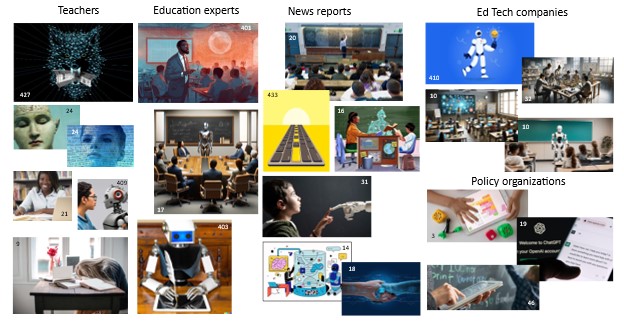
These visual representations reflect the broader discourse surrounding teacher autonomy in AI-integrated classrooms. They highlight the tension between the promise of AI-enhanced education and the potential threat to teacher agency and decision-making power. The imagery used by different stakeholders may influence perceptions of teacher roles and autonomy, potentially impacting policy decisions and classroom practices related to AI integration in ELA education.
This analysis of visual elements demonstrates how discourses construct and potentially challenge teacher autonomy in the context of AI integration, addressing our research questions about the impact of AI on teachers’ pedagogical decision-making processes and practices in ELA classrooms. The imagery also reflected the overarching disconnect in the non-teacher discourses of the stated goal of centering learning on human relationships (i.e., teachers and students) and the reality that AI tutors and AI adaptive learning applications center learning in a technology platform not facilitated by a human educator.
Interviews
The DA of ELA teacher interviews indicated that the early-career teachers interviewed desire ongoing professional development training and coaching. These teachers discussed confronting numerous challenges in their teaching, especially around achieving work-life balance. While all the ELA teachers interviewed were familiar with and had used ChatGPT, and all had used some other AI tools, such as Grammarly and Dall-E, none felt like they were very knowledgeable about AI. Several mentioned challenges related to ChatGPT, including not being able to access ChatGPT and AI tools on school computers, not having the time to learn about AI, and not being sure if learning more about AI and digital learning platforms was a worthwhile investment of their time and effort.
Many teachers expressed concerns about how AI tools might impact their autonomy in the classroom. They highlighted the tension between the potential benefits of AI and the fear of losing control over their teaching practices. Several teachers noted that, while they were interested in learning about AI, they were apprehensive about external pressures to adopt these technologies without adequate preparation or consideration of their impact on pedagogical decision-making.
Overall, the teachers who participated in the interviews were interested in learning more about AI in the classroom. The consensus opinion was that their primary interest is in learning how they can use AI, and specifically ChatGPT, in their own work. The teachers all reported that they enjoyed conversing with AI and made comments about how natural it was to use chat as a way to work with these AI applications. However, they also emphasized the importance of maintaining their professional judgment and the ability to make autonomous decisions about when and how to incorporate AI tools in their teaching.
The polarized views expressed in the discourses reflected varying perspectives on teacher autonomy in the context of AI integration (see appendix)
Resistance Discourse. Some teachers expressed strong concerns about AI, viewing it as a threat to their autonomy and professional judgment. For example, “It makes me angry that software developers with little experience or interest in the provision of education have created a ‘tool’ that replaces the very human activities of thinking and writing” (teacher‘s blog, D24). This discourse constructed teacher autonomy as being under threat from external, noneducational entities, positioning teachers as defenders of human-centered education.
Cautious Adoption Discourse. Other educators took a more pragmatic approach, seeking to maintain autonomy while cautiously integrating AI: “I’m choosing to take the same perspective with AI that I took waaaay back in January of 2014 about technology when I started this blog: I can either say, ‘Oh my gosh, AI in the classroom…’ or, I can say, ‘Oh my gosh!! AI in the classroom!’” (teacher authored technology blog, D26). This discourse framed teacher autonomy as the ability to make informed decisions about AI integration, positioning teachers as adaptable professionals.
Embracing AI Discourse. Some stakeholders, particularly nonteachers, presented AI as a tool to enhance teaching: “Artificial intelligence tools like Chat GPT can serve as personal editor to kids. They provide immediate writing feedback. And they free teachers to give students more personal instruction and guidance.: (Crossley, 2023). This discourse constructed teacher autonomy as being enhanced by AI, framing AI as a tool that offers new ways for students to learn without teachers allowing teachers to focus on individual students’ needs.
Fear About Teacher Autonomy Discourse. The discourse surrounding AI in education revealed shifting constructions of teacher autonomy. Initial fears and concerns gradually were replaced by a view that AI can be a complement to human teaching. Early discourses framed AI as a potential threat to teachers’ roles and decision-making power. “It’s easy to understand why educators feel threatened. ChatGPT is a freakishly capable tool that landed in their midst with no warning…” (news report, D4). This initial framing positioned teachers as potentially obsolete, challenging their traditional autonomy in the classroom.
Shift Toward Cautious Integration. As understanding of AI capabilities grew, the discourse began to shift toward viewing AI as a tool that teachers could control and integrate into their practice.
I teach English, and at first, I was worried about using AI because I thought students might use it to cheat or complete their assignments. … As I learned more about AI — what’s good about it and what’s not — I realized it could actually be helpful in our classroom. (teacher’s blog, D54).
This evolution suggests a redefinition of teacher autonomy from complete control over all aspects of teaching to strategic integration and management of AI tools.
Emergence of AI as a Complement to Teaching. Later discourses increasingly framed AI as a complement to, rather than a replacement for, teacher expertise. “Both educators and students are embracing innovation. They are optimistic that the tool’s remarkable strengths can meaningfully complement traditional instruction…” (Walton Family Foundation survey, 2023, D46). This way of framing positions teacher autonomy as the ability to leverage AI to enhance teaching, rather than being replaced by it.
Despite the overall trend toward acceptance, the discourse continued to reflect tension between AI as an opportunity and as a threat to teacher autonomy. “Teachers are no longer gatekeepers of information, but facilitators.” (MIT Technology Review article, D13). This ongoing negotiation of teacher roles in relation to AI reflects the continuing evolution of how teacher autonomy is constructed and understood in the age of AI. The evolution of this discourse demonstrates how perceptions of teacher autonomy in relation to AI have shifted from initial fear and resistance to a more nuanced understanding of AI as a tool that can be integrated into teaching practices. However, it also highlights the ongoing need for teacher education programs to prepare educators to maintain their autonomy and decision-making power in AI-integrated educational environments.
RQ2. Preparing Preservice Teachers to Critically Evaluate and Engage With GenAI
The reflexive thematic analysis (Clarke & Braun, 2916) revealed five key themes related to AI use in schools, teachers, and teaching preparation, which included (a) GenAI is transforming technology, but the direction is unclear, (b) humans should be at the center of learning, (c) teachers are an object of the discourse, not a participant in the shaping of policies, (d) shifts in perceived teacher roles, and (e) AI technology is changing ELA teacher practice. The sections that follow describe each of these five themes in depth.
Theme 1: GenAI is Transformative Technology, But the Direction Is Unclear
The rapid emergence and evolution of GenAI and related technologies are fundamentally altering the educational landscape, automating many cognitive, analytical, and creative skills traditionally associated with teaching. This technological shift has ushered in a climate of uncertainty that significantly impacts teacher autonomy, challenging educators to navigate an ever-changing terrain while striving to maintain their professional identity and decision-making power.
At the heart of this transformation lies a profound tension between the potential of AI to enhance education and its capacity to disrupt long-established teaching practices. As one educator poignantly expressed, “AI will impact education. … It makes me angry that software developers with little experience or interest in the provision of education have created a ‘tool’ that replaces the very human activities of thinking and writing” (teacher’s blog, D24). This sentiment encapsulates the anxiety many teachers feel as they grapple with external technological forces that threaten to erode their autonomy in shaping instructional approaches.
The introduction of GenAI tools is reshaping the decision-making landscape for teachers, particularly in ELA classrooms. As AI capabilities expand, educators find themselves at a crossroads, compelled to reconsider when and how to incorporate these tools into their teaching. An ELA teacher’s observation that “ChatGPT is not going to end English class, but I think it will change it. I think it will force us to examine the work we give to students” (ELA teacher’s blog, D71) underscores the need for teachers to redefine their autonomy within a technologically augmented educational environment. This shift requires a delicate balance between embracing innovation and preserving the core values of education that have long been the province of human teachers.
The unclear trajectory of GenAI’s impact creates a challenging balancing act for teachers trying to maintain their autonomy while adapting to technological change. Policy experts warn of the potential pitfalls, noting,
The promise (or over-promise) of AI is that it could potentially provide some types of learning experiences without the presence of a high-quality teacher. Given teacher shortages and retention issues, AI could be viewed as a means of providing “something” where “nothing” exists, inadvertently perpetuating education inequity by advancing a cheaper but inferior education system. (CoSN/Microsoft, D48)
This cautionary perspective highlights the tension between leveraging AI’s potential and preserving teachers’ autonomous role in ensuring educational quality and equity.
Moreover, the transformative nature of GenAI affects not only teaching practices but also the skills students need to develop. Teachers find themselves navigating this change while striving to maintain their professional judgment about what and how to teach. The observation that “a clear majority of students (63%) and teachers (72%) agree with the statement that ‘ChatGPT is just another example of why we can’t keep doing things the old way for schools in the modern world’” (Understanding teacher and student views on ChatGPT, D46) reflects the growing recognition that educational practices must evolve. However, this evolution must not come at the cost of teacher autonomy and expertise.
As the educational landscape continues to shift with AI integration, the preservation and adaptation of teacher autonomy emerge as crucial factors in ensuring that the benefits of these technologies are realized without compromising the essential human elements of teaching and learning. The unclear direction of GenAI’s impact creates a complex environment, in which teacher autonomy is simultaneously challenged and redefined. While the technology offers new possibilities for instruction and assessment, it also introduces uncertainties that can limit teachers’ traditional decision-making power.
In this context, the role of teacher education and ongoing professional development becomes increasingly vital. Preparing educators to engage critically with AI technologies, to make informed decisions about their integration, and to advocate for their professional autonomy in AI-augmented classrooms will be essential. As the education system grapples with these transformative technologies, supporting teachers in maintaining and redefining their autonomy will be key to navigating the uncertain future of AI in education.
Theme 2: Humans Should Be at the Center of Learning
A common theme that emerged throughout discourses is the strong recommendation for humans to remain in the loop at every phase of AI evaluation, adoption, and implementation. The perspective of teachers, school administrators, and the U.S. Department of Education is that human-AI teaching teams with a human teacher using AI to augment and streamline their work and support students is the best path to quality education for all students. This places teachers and students at the center of the learning process.
For teachers and students, ChatGPT is an example of why we need education to modernize. A clear majority of students (63%) and teachers (72%) agree with the statement that “ChatGPT is just another example of why we can’t keep doing things the old way for schools in the modern world.” (Understanding teacher and student views on Chatgpt, D46)
We champion the “humans in the loop” concept, underscoring the critical, irreplaceable role in instruction and decision-making. (Peninsula School District, Artificial Intelligence – Principles and Beliefs, D47)
Although there is a general agreement that humans are essential in education and teaching, the effect of GenAI tools on the essential human relationship, teacher-student relationships, is not yet clear. The dominant discourses suggest that GenAI frees up teachers’ time for more meaningful interactions with students. However, a dissenting argument suggests that GenAI platforms reduce the human connections and rapport between teachers and students.
Theme 3: Teachers Are an Object of the Discourse, Not a Participant in the Shaping of Policies
The analysis of the discourse surrounding AI in education reveals a concerning trend: Teachers are often positioned as objects of policy rather than active participants in its formation. This positioning significantly impacts teacher agency and autonomy, as educators find themselves required to implement policies and technologies in which they had little to no input. This disconnect between policy-making and classroom reality has far-reaching implications for the integration of AI in education and the preservation of teacher autonomy.
Limited Representation in Policy Discussions. Despite being on the front lines of education, teachers are notably absent from many high-level discussions about AI integration in schools. As one educator noted,
Institutions and educators now also find themselves in the uneasy position of not just grappling with a technology that they didn’t ask for, but also reckoning with something that could radically reshape their jobs and the world in which their students will grow up. (news report, D13).
This statement underscores the reactive position teachers are often forced into, responding to decisions made without their input. The lack of teacher representation in these discussions undermines their agency, as policies are shaped without the benefit of their practical insights and experiences.
Top-Down Implementation of AI Technologies. The implementation of AI technologies in education often follows a top-down approach, with decisions made by administrators, policymakers, and technology companies rather than educators. This approach can lead to a mismatch between the intended use of AI tools and the realities of the classroom. As one teacher expressed. “Schools are hungry for specifics on AI policy, but most states and districts have held off in providing them” (education news report, D18). This policy vacuum leaves teachers in a precarious position, expected to integrate AI technologies without clear guidelines or the agency to shape how these tools are used in their classrooms.
Erosion of Professional Judgment. The positioning of teachers as objects rather than agents in the AI discourse can lead to an erosion of their professional judgment. When policies and technologies are imposed without teacher input, it implicitly devalues their expertise and autonomy. This is evident in the way some discourses frame AI as a solution to teacher shortages or inefficiencies: “The promise (or over-promise) of AI is that it could potentially provide some types of learning experiences without the presence of a high-quality teacher” (CoSN/Microsoft, D48). Such framing not only undermines teacher agency but also raises concerns about the quality and equity of education in AI-integrated environments.
Theme 4: Shifts in Perceived Teacher Roles
The discourse around AI in education often constructs shifts in teacher roles without adequately considering teachers’ perspectives on these changes. For instance, “Teachers are no longer gatekeepers of information, but facilitators” (MIT Technology Review article, D13). While this shift may have merits, the lack of teacher involvement in defining and shaping these new roles can lead to a sense of disempowerment and loss of professional identity.
Impact on Classroom Autonomy. The exclusion of teachers from policy-making processes directly impacts their autonomy in the classroom. When teachers are not involved in decisions about AI integration, they may find their instructional choices limited or predetermined by technologies they did not choose. This disconnect between policy expectations and classroom realities further erodes teacher agency and their ability to make autonomous decisions about their teaching practices.
The Need for Teacher Voice in AI Policy. The exclusion of teachers from AI policy discussions not only impacts their individual agency but also the overall effectiveness of AI integration in education. Teachers’ practical knowledge and understanding of student needs are crucial for developing policies that truly enhance learning. As one educator emphasized, “In short, we as English educators have deep concerns about the rapid expansion of AI, especially without guidelines for the ethical use of these tools. And yet, AI is here” (ELA teacher, D55). This statement highlights the urgent need for teacher involvement in shaping AI policies and guidelines, ensuring that the integration of these technologies aligns with pedagogical best practices and ethical considerations.
Moving Toward Teacher Empowerment. To address these issues and enhance teacher agency in the age of AI, there needs to be a fundamental shift in how educational policies are developed and implemented. This involves implementing a series of recommendations that involve first creating platforms for teacher input in AI policy discussions. Second, there needs to be significant development of AI integration strategies that respect teacher autonomy and professional judgment. Third, educators must be provided with comprehensive professional development that empowers teachers to make informed decisions about AI use in their classrooms. Finally, the policies and practices must recognize and value teachers’ expertise in the face of technological change.
By positioning teachers as active participants rather than passive objects in the AI discourse, ELA education can ensure that the integration of these technologies enhances rather than diminishes teacher agency and autonomy. This approach not only benefits teachers but also ensures that AI is implemented in ways that truly support student learning and development.
Theme 5: AI Technology Is Changing ELA Teaching Practice
The integration of AI technology into education is profoundly altering teaching practices, with particularly significant implications for ELA teachers. These changes are reshaping the landscape of writing instruction, literature analysis, and language teaching, directly impacting ELA teachers’ decision-making processes and autonomy in several key areas. AI tools, particularly large language models like ChatGPT, are challenging traditional approaches to writing instruction and assessment. ELA teachers now face complex decisions about how to teach writing in an era where AI can generate human-like text. This shift is evident in one teacher’s reflection:
ChatGPT is not going to end English class, but I think it will change it. I think it will force us to examine the work we give to students. We all know that writing 5 paragraph essays is not part of the daily routine for most adults. So maybe it’s time that ship sails off into the sunset. (ELA teacher’s blog, D71)
This statement highlights how AI is prompting ELA teachers to reconsider their autonomy in designing writing assignments and assessments. Teachers must now decide whether to embrace AI as a tool for writing support or to develop new strategies that emphasize skills AI cannot replicate, potentially limiting their traditional autonomy in curriculum design.
AI’s ability to analyze and summarize texts quickly is changing how literature can be taught and discussed in ELA classrooms. This capability challenges teachers’ traditional role as the primary guide for textual interpretation. An ELA educator noted,
As I learned more about AI—what’s good about it and what’s not—I realized it could actually be helpful in our classroom. One big moment was when we used AI to create pictures of characters from a story we were reading to discuss topics of bias in literature. (teacher’s blog, D54)
While this example shows a creative use of AI, it also indicates a shift in the teacher’s role from sole authority on textual analysis to a facilitator of AI-assisted interpretation. This change requires ELA teachers to make critical decisions about when and how to incorporate AI tools in literature discussions, balancing technological assistance with their own expertise and judgment.
AI-powered tools offer unprecedented opportunities for personalized learning and feedback in ELA classrooms. However, it also presents challenges to teacher autonomy in instructional decision-making. While this potential for personalization can enhance learning, it also shifts some decision-making about feedback and instruction from the teacher to the AI system. ELA teachers must now navigate when to rely on AI-generated feedback and when to provide their own insights, potentially reducing their autonomy in the feedback process.
Balancing AI integration With Core ELA Competencies
AI tools are also impacting how language skills are taught and practiced in ELA classrooms. Language learning applications and AI writing assistants are changing the landscape of vocabulary development, grammar instruction, and language acquisition. This technological shift requires ELA teachers to make decisions about how to integrate these tools effectively while maintaining their central role in language instruction.
The integration of AI in ELA classrooms necessitates a delicate balance between leveraging technological advantages and preserving essential human-centered aspects of language arts education. ELA teachers must now make critical decisions about how to maintain focus on core competencies such as critical thinking, creativity, and empathy in writing and reading, which may not be easily replicated or taught by AI. This balancing act is reflected in the concerns of some educators and underscores the challenges ELA teachers face in maintaining their autonomy and effectiveness while integrating AI tools that may not align perfectly with their pedagogical goals or increase their workload.
Evaluating Criticality and Bias in the Algorithms
CAI-LLM platforms can provide teachers with generalized recommendations for teaching practices and instruction as well as advice and information directly to students, but bias inherent within AI can amplify dominant ways of thinking. LLMs are trained on vast amounts of text data, but this data is a biased subset of all the information and knowledge in the world. Outputs reflect the patterns and perspectives present in its training data, which cannot capture the full complexity and diversity of human knowledge and experience. While LLMs can generate human-like text, they lack true understanding and reasoning abilities. They operate based on statistical patterns in their training data, which is a simplified approximation of how human language and cognition work.
As Kerssens and van Dijck (2022) observed with data dashboards, repeated interaction with LLM-based systems may lead users to equate the system’s reductive and biased representation of knowledge with a true and complete understanding. This is an important consideration that impacts both student and teacher autonomy in navigating the learning process.
RQ3. How Can ELA Teacher Ed Programs Foster Pedagogical Autonomy?
Using AI to Improve Teaching Tasks and Reduction of Workloads
The discourse around AI reducing workloads constructs teacher autonomy in terms of time management and task prioritization: “By utilizing ChatGPT, we can save time and focus our energy on other important aspects of their job, such as engaging with their students and creating lesson plans that meet their needs” (teacher-authored LinkedIn article, D9). However, this construction of autonomy is challenged by some teachers’ experiences: “I polled 1,485 English teachers, and 56% of them think ChatGPT will actually cause them MORE work rather than lessen their already maxed-out capacity” (teacher blog, D37).
This contradiction highlights the tension between idealized constructions of AI-enhanced autonomy and the realities of classroom implementation. While AI technology offers numerous opportunities to enhance ELA instruction, it also presents significant challenges to teacher autonomy and decision-making processes. ELA teachers and teacher educators must navigate a complex landscape where their traditional roles are being redefined, their instructional practices are evolving, and their professional judgment is being challenged by AI capabilities.
Respond to the Lack of Clear, Consistent Policies
The absence of clear policies on AI use in education impacts teacher autonomy: “Schools are hungry for specifics on AI policy, but most states and districts have held off in providing them” (education news report, D18). This policy vacuum potentially enhances teacher autonomy by allowing for individual decision-making, but it also creates uncertainty that may inhibit teachers from fully exercising their professional judgment.
In addition, the analysis revealed a significant gap in the discourses regarding teacher education and training for AI integration. This omission challenges teacher autonomy by potentially leaving teachers unprepared to make informed decisions about AI use in their classrooms. “Across all the discourses reviewed, the role and importance of teacher education and training are missing. Teacher educators are present but have little apparent influence in setting the AI in education priorities or policies.” This gap in the discourse suggests a need for greater emphasis on preparing teachers to maintain and exercise their autonomy in AI-integrated educational environments.
Recommendations
Our analysis of the discourse surrounding AI in ELA education has revealed significant challenges to teacher autonomy and agency. The evolving role of AI in classrooms, coupled with teachers’ limited participation in shaping AI policies, necessitates a comprehensive approach to prepare and empower ELA teachers. Drawing from our findings, we propose the following recommendations to address our research questions on how AI impacts ELA teachers’ decision-making processes and autonomy and how teacher education programs can foster pedagogical autonomy in an AI-integrated environment. Successfully integrating AI into ELA classrooms while maintaining teacher autonomy will require ongoing professional development, thoughtful policymaking, and a commitment to balancing technological innovation with the irreplaceable human elements of language arts education.
Redefining ELA Teacher Roles in AI-Integrated Classrooms
Our analysis revealed a shift in perceived teacher roles, with educators often positioned as facilitators rather than primary knowledge sources. We recommend the following steps:
- Develop frameworks that clearly articulate the essential role of ELA teachers in AI-integrated environments, emphasizing their unique contributions to critical thinking, creativity, and emotional engagement with language and literature.
- Create professional development programs that help ELA teachers leverage AI as a tool to enhance, rather than replace, their instructional practices, thus reinforcing their central role in the learning process.
These recommendations address the research question about the relationships between teachers and AI tools, ensuring that ELA teachers maintain their autonomy and professional identity.
Empowering ELA Teachers in AI Policy Development
Our findings highlighted the limited involvement of ELA teachers in shaping AI policies. To engage teachers in policy formation, we propose the following:
- Establish formal channels for ELA teachers to participate in AI policy discussions at school, district, and state levels.
- Encourage teacher-led action research on AI integration in ELA classrooms, using these findings to inform policy decisions.
Enhancing AI Literacy and Critical Evaluation Skills
The analysis revealed uncertainties about AI’s impact on teaching practices. To address this, we recommend the following:
- Integrate AI literacy courses into ELA teacher education programs, focusing on the specific applications and implications of AI in language arts instruction.
- Develop frameworks for critically evaluating AI tools in ELA contexts, empowering teachers to make informed decisions about AI integration.
These recommendations support ELA teachers in maintaining their autonomy by equipping them with the knowledge to navigate AI integration effectively.
Designing ELA Teacher Training
Building on our analysis of the ways AI is changing ELA teaching practices, we propose that ELA teacher training specifically think through how to support teacher agency that includes that includes the following:
- Adaptive Pedagogy: Train ELA teachers to design “AI-resistant” assignments that emphasize uniquely human skills in writing and literary analysis. This approach allows teachers to maintain their autonomy in curriculum design while acknowledging the realities of AI tools.
- Ethical AI Integration: Develop case studies and ethical frameworks specific to ELA contexts, addressing issues such as AI-generated content and plagiarism detection. This training empowers teachers to make autonomous, ethical decisions about AI use in their classrooms.
- Assessment in the AI Era: Provide training on creating authentic assessments that accurately measure student learning in an AI-integrated environment. This preserves teacher agency in the crucial area of student evaluation.
- AI-Human Collaboration: Offer practical training on using AI as a teaching assistant for tasks like generating writing prompts or analyzing text complexity. Emphasize strategies for maintaining the teacher’s role as the primary decision-maker, using AI to enhance rather than replace human judgment.
- Advocacy and Policy Engagement: Train ELA teachers in advocacy skills and policy analysis, enabling them to effectively participate in discussions about AI integration in education. This directly addresses the issue of teacher exclusion from policy-making identified in our analysis.
- Reflective Practice: Incorporate reflective practice methodologies that encourage ELA teachers to continuously evaluate and articulate their unique value in an AI-integrated classroom. This supports teachers in maintaining a strong professional identity amidst technological change.
These training recommendations are designed to directly support ELA teacher agency by equipping educators with the skills, knowledge, and confidence to navigate AI integration while maintaining their professional autonomy. By addressing the specific challenges identified in our analysis, such as the changing nature of writing instruction and the need for ethical decision-making in AI use, these recommendations aim to empower ELA teachers to shape the future of their profession in the AI era.
These recommendations promote work toward an educational landscape where AI enhances rather than diminishes the role of ELA teachers. This approach ensures that the integration of AI technologies in ELA classrooms is guided by pedagogical expertise and ethical considerations, preserving the essential human elements of language arts education while leveraging the benefits of technological advancement.
Limitations
This study relies on a relatively small number (n = 10) of teacher interviews and analysis of a limited sample of digital artifacts that are published in English and available on public websites and platforms. Private digital discourse from Facebook and other social media was not included in this study. In addition, nondigital forms of discourse were not included. Finally, while no geographic parameters were included in the document search criteria, the discourses analyzed were primarily focused on the USA. These findings and recommendations may not be applicable in other regions or countries found internationally.
Conclusion
This study examined the complex landscape of GenAI integration in ELA education, with a particular focus on its impact on teacher autonomy and agency. Through interviews with ELA teachers and using discourse analysis of digital content produced by various stakeholders, we uncovered five key themes and power dynamics that influence the adoption and implementation of GenAI tools in ELA classrooms and their implications for teacher autonomy.
Our analysis revealed significant tension between the transformative potential of AI and the preservation of teacher autonomy. We found that while AI is often framed as a tool to enhance teaching practices, there is a risk of diminishing teacher agency in the process. The discourse often positions teachers as facilitators rather than primary knowledge sources, challenging traditional notions of teacher autonomy in ELA instruction.
We found that AI-related discourses often exclude teachers from policy-making processes, underscoring the importance of equipping future ELA teachers with the skills to not only use AI tools effectively but also to advocate for their professional autonomy in AI-integrated environments.
We propose specific ways that ELA teacher education programs can foster pedagogical autonomy and critical literacy skills in preservice teachers and emphasize the need for a multifaceted approach. This includes developing frameworks for ethical AI integration, training in adaptive pedagogy, and fostering skills in advocacy and policy engagement. These elements are crucial in preparing ELA teachers to maintain their autonomy while leveraging AI to enhance their teaching practices.
Looking forward, it is crucial that the integration of AI in ELA education is guided by a commitment to preserving and enhancing teacher autonomy. This requires a shift in the ways educational policies are developed and implemented, with greater emphasis on teacher input and agency. By centering the voices and experiences of ELA teachers, fostering critical AI literacy, and promoting equity and accessibility, the power of AI can be harnessed to enhance, rather than replace, the essential human elements of language arts education.
As the field of education continues to grapple with the rapid advancement of AI technologies, further research is needed to explore the long-term impacts of GenAI on ELA education and teacher autonomy. This includes investigating effective models of AI integration that preserve teacher agency, examining the evolving role of ELA teachers in AI-enhanced environments, and developing best practices for AI-integrated ELA instruction that maintain the crucial human elements of teaching and learning.
While AI presents both challenges and opportunities for ELA education, the preservation of teacher autonomy and agency must remain at the forefront of integration efforts. By empowering ELA teachers with the knowledge, skills, and decision-making authority to navigate this new landscape, the field can ensure that AI serves as a tool to enhance education, rather than a force that diminishes the irreplaceable role of human teachers in fostering critical thinking, creativity, and a love for language and literature.
References
Biesta, G. (2015). What is education for? On good education, teacher judgement, and educational professionalism. European Journal of Education, 50(1), 75-87.
Bishop, E. (2014). Critical literacy: Bringing theory to praxis. Journal of Curriculum Theorizing, 30(1).
Bryant, J. Heitz, C. Sanghvi, S., & Wagle, D. (2020). How artificial intelligence will impact K-12 teachers. McKinsey Global. https://www.mckinsey.com/industries/education/our-insights/how-artificial-intelligence-will-impact-k-12-teachers
Calvert, L. (2016). The power of teacher agency. The Learning Professional, 37(2), 51.
Clarke, V., & Braun, V. (2016). Thematic analysis. The Journal of Positive Psychology, 12(3), 297–298.
Cope, B., & Kalantzis, M. (2015). The things you do to know: An introduction to the pedagogy of multiliteracies. In B. Cope & M. Kalantzis (Eds.), A pedagogy of multiliteracies (pp. 1-36). Palgrave Macmillan.
Crossley, S. (2023). How AI technologies can enhance learning and be “intelligent partners” for teachers and students. Walmart Family Foundation. https://www.waltonfamilyfoundation.org/stories/k-12-education/how-ai-technologies-can-enhance-learning-and-be-intelligent-partners-for-teachers-and-students
Daneshfar, S., & Moharami, M. (2018). Dynamic assessment in Vygotsky’s sociocultural theory: Origins and main concepts. Journal of Language Teaching and Research, 9(3), 600-607.
Darling-Hammond, L., Hyler, M. E., & Gardner, M. (2017). Effective teacher professional development. Learning Policy Institute.
Fajardo, M. F. (2015). A review of critical literacy beliefs and practices of English language learners and teachers. University of Sydney Papers in TESOL, 10, 29-56.
Gee, J. P. (2014). How to do discourse analysis: A toolkit (2nd ed.). Routledge.
Giannini, S. (2023). Generative AI and the future of education. UNESCO.
Jemal, A. (2017). Critical consciousness: A critique and critical analysis of the literature. The Urban Review, 49, 602-626.
Jeon, J., & Lee, S. (2023). Large language models in education: A focus on the complementary relationship between human teachers and ChatGPT. Education and Information Technologies, 28(12), 15873-15892.
Ji, H., Han, I., & Ko, Y. (2023). A systematic review of conversational AI in language education: Focusing on the collaboration with human teachers. Journal of Research on Technology in Education, 55(1), 48-63.
Kasneci, E., Sessler, K., Küchemann, S., Bannert, M., Dementieva, D., Fischer, F., Gasser, U., Groh, G., Günnemann, S., Hüllermeier, E., Krusche, S., Kutyniok, G., Michaeli, T., Nerdel, C., Pfeffer, J., Poquet, O., Sailer, M., Schmidt, A., Seidel, T., Stadler, M., … & Kasneci, G. (2023). ChatGPT for good? On opportunities and challenges of large language models for education. Learning and Individual Differences, 103, art. No. 102274.
Kerssens, N., & van Dijck, J. (2022). Governed by edtech? Valuing pedagogical autonomy in a platform society. Harvard Educational Review, 92(2), 284-303.
Kozulin, A. (2003). Psychological tools and mediated learning. In A. Kozulin, B. Gindis,
V. S. Ageyev, & S. M. Miller (Eds.), Vygotsky’s educational theory in cultural context (pp. 15-38). Cambridge University Press.
Luke, A. (2012). Critical literacy: Foundational notes. Theory into Practice, 51(1), 4-11.
Mirra, N., Morrell, E., & Filipiak, D. (2018). From digital consumption to digital invention: Toward a new critical theory and practice of multiliteracies. Theory Into Practice, 57(1), 12-19.
Mistretta, S. (2023). The singularity is emerging: Large language models and the impact of artificial intelligence on education. In S. Misrette (Ed.), Reimagining education—The role of e-learning, creativity, and technology in the post-pandemic era.
Mullet, D. R. (2018). A general critical discourse analysis framework for educational research. Journal of Advanced Academics, 29(2), 116-142.
Murphy, R. (2008). Dynamic assessment precursors: Soviet ideology, and Vygotsky. The Irish Journal of Psychology, 29(3-4), 195-236.
Pangrazio, L., & Sefton-Green, J. (2021). Digital rights, digital citizenship and digital literacy: What’s the difference? Journal of New Approaches in Educational Research, 10(1), 15-27.
Pearson, L. C., & Moomaw, W. (2005). The relationship between teacher autonomy and stress, work satisfaction, empowerment, and professionalism. Educational Research Quarterly, 29(1), 37-53.
Priestley, M., Edwards, R., Priestley, A., & Miller, K. (2012). Teacher agency in curriculum making: Agents of change and spaces for maneuver. Curriculum Inquiry, 42(2), 191-214.
Reich, J., & Ito, M. (2017). From good intentions to real outcomes: Equity by design in learning technologies. Digital Media and Learning Research Hub.
Selwyn, N. (2019). Should robots replace teachers? AI and the future of education. Polity Press.
U.S. Department of Education. (2023).Artificial intelligence and the future of teaching and learning: Insights and recommendations. https://tech.ed.gov/ai-future-of-teaching-and-learning/
Vygotsky, L. S. (1978). Mind in society: The development of higher psychological processes. Harvard University Press.
Walton Family Foundation. (2023). Understanding teacher and student views on ChatGPT. https://www.waltonfamilyfoundation.org/understanding-teacher-and-student-views-on-chatgpt
Wermke, W., & Höstfält, G. (2014). Contextualizing teacher autonomy in time and space: A model for comparing various forms of governing the teaching profession. Journal of Curriculum Studies, 46(1), 58-80.
Wertsch, J. V. (2007). Mediation. In H. Daniels, M. Cole & J. V. Wertsch (Eds.), The Cambridge companion to Vygotsky (pp. 178-192). https://www.academia.edu/107632605/The_Cambridge_Companion_to_Vygotsky
Williams, O. A. (2022). Critical literacy in practice: How educators leverage supports and overcome challenges to enact critical literacy pedagogy in their classrooms. Literacy Research: Theory, Method, and Practice, 71(1), 323-340.
Appendix
Documents Used in Analysis
| Code | Date | Publisher Characteristics | Format | Author’s Role(s) |
|---|---|---|---|---|
| D1 | 3/28/23 | Self | Blog | Tech Specialist |
| D2 | 4/11/23 | Self | Blog | Teacher |
| D3 | 5/2/23 | World Bank | Article | Ed policy expert |
| D4 | 1/12/23 | NY Times | Article | Tech Journalist |
| D5 | 3/21/23 | Self | Blog/podcast | Speaker/former middle school teacher |
| D6 | 10/23/24 | CoSN | PowerPoint, video, press release | Tech experts |
| D7 | 3/28/23 | Higher Ed | Blog | Higher Ed/Trainer |
| D8 | no date | Ed Tech | Online course | Ed Tech/Trainer |
| D9 | 3/20/23 | Self | Article | Teacher/Content expert |
| D10 | 4/12/24 | eSpark | Article | Writer |
| D11 | 3/27/23 | Medium | Article | SEO writer |
| D12 | 4/6/23 | Academic | Article | AI Expert |
| D13 | 8/23/23 | Wired | Article | Journalist |
| D14 | 2/19/24 | Education Week | Article | Journalist |
| D15 | 4/12/23 | Teacher organization | Article | Journalism student |
| D16 | 8/23/23 | Politico | Article | Journalist |
| D17 | 11/20/23 | Pedogogy.ai | Article | Researcher/product analyst |
| D18 | 10/5/23 | Education Week | Article | Education Jouralist |
| D19 | 1/9/23 | Brookings | Article | Academic researcher |
| D20 | 11/15/23 | Nature | Article | Journalist |
| D21 | March 2023 | Self | Blog | Teacher |
| D22 | N/A | Self | Blog | Teacher |
| D23 | N/A | Self | blog | Teacher |
| D24 | 2/27/23 | Self | Blog | Teacher |
| D25 | N/A | Self | Blog | Teacher/Author |
| D26 | 10/8/23 | Self | Blog | Teacher |
| D27 | 11/17/23 | Self | Blog | Teacher/IT Director |
| D28 | N/A | Self | Blog | Teacher |
| D29 | 2/15/24 | Self | Blog | Teacher |
| D30 | 1/0/00 | Self | Blog | Teacher |
| D31 | 3/5/24 | Conde Nast | Article | Journalist |
| D32 | 3/14/24 | eSpark | Contributor article | Tech expert |
| D33 | 8/8/23 | eSpark | Article | Ed Tech marketer |
| D34 | 8/17/23 | Self | Blog | Academic researcher |
| D35 | 7/1/23 | Self | Blog | EdTech Consultant |
| D36 | 1/4/23 | Medium | Article | Education advisor |
| D37 | 2/10/23 | Self | Blog | Teacher |
| D38 | 7/10/23 | Yale University Press | Article | Professors |
| D39 | 12/21/23 | NY Times | Newsletter | Tech Journalist |
| D40 | No date | Self | Research document | Grad student |
| D41 | 2023 | Self | Blog | Administrator |
| D42 | 6/26/23 | Self | Blog | Adjunct/Grad student |
| D43 | No date | The Center for Professional Education of Teachers (CPET) at Teachers College, Columbia University | Webpage | PhD student |
| D44 | No date | Cograder | Article | Content writer |
| D45 | 5/1/23 | US Department of Education’s Office of Educational Technology | Policy recommendation | Policy experts |
| D46 | 3/1/23 | Walton Family Foundation | Press release, website articles | Multiple authors |
| D47 | July 2023 | Peninsula School District | Policy statement | School IT Director |
| D48 | Spring 2023 | CoSn/Microsoft | Tech whitepaper | Ed Tech experts |
| D49 | No date | Institute for Ethical Al in Education | Policy recommendations | Policy experts |
| D50 | 11/1/22 | Academic Journal | Opinion | Teacher and University Professor |
| D51 | 2/3/23 | Academic Journal | Research article | Academic researchers |
| D52 | no date | Webpage | AI methods | Academic researcher |
| D53 | no date | Webpage | AI methods | Unknown |
| D54 | 1/29/24 | Webpage | School website | Teacher |
| D55 | Aug 2023 | Academic Journal | Article | Multiauthor |
| D56 | 2/21/2023 | Teachers & Writers Magazine | Article | Writer, poet, teacher |
| D57 | 12/15/22 | University website | Article | Unknown |
| D58 | 12/19/23 | Education Foundation Website | Article | Teacher |
| D59 | 2/14/23 | ascd.org | Article | Administrator |
| D60 | 10/26/23 | The Hechinger Report | Newsletter article | Journalist |
| D61 | 9/21/23 | Clayton Christensen Institute | Article | Research fellow |
| D62 | 11/27/23 | Ed Surge | Article | Teacher interview |
| D63 | 7/10/23 | Humanities Commons | Working paper | Policy experts |
| D64 | 4/10/23 | Self | Blog | Teacher |
| D65 | 8/16/23 | Self | Blog | Teacher |
| D66 | 7/14/23 | Self | Blog | Teacher |
| D67 | 4/17/23 | Self | Blog | Retired teacher |
| D68 | 11/10/23 | Edutopia | Article | Teacher |
| D69 | 3/22/23 | Education Next | Article | Cowritten by an author and a grad student |
| D70 | 1/25/24 | NY Times | Article | Journalist |
| D71 | 12/12/22 | Self | Blog | Teacher/Author |
| D72 | 1/8/24 | Edweek | Article | Education Jouralist |
| D73 | 5/1/23 | US Department of Education’s Office of Educational Technology | Policy recommendations | Policy experts |
| D74 | no date | Self | Blog | Teacher |
